
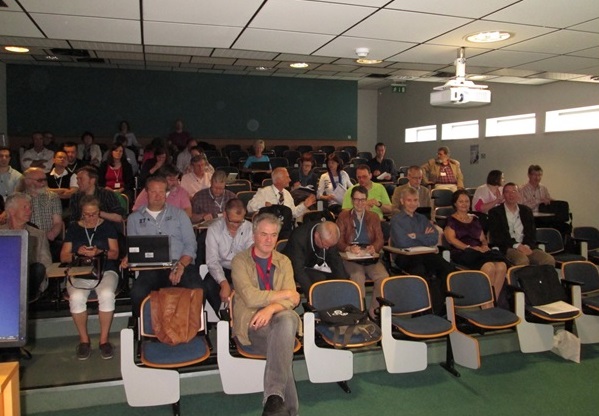
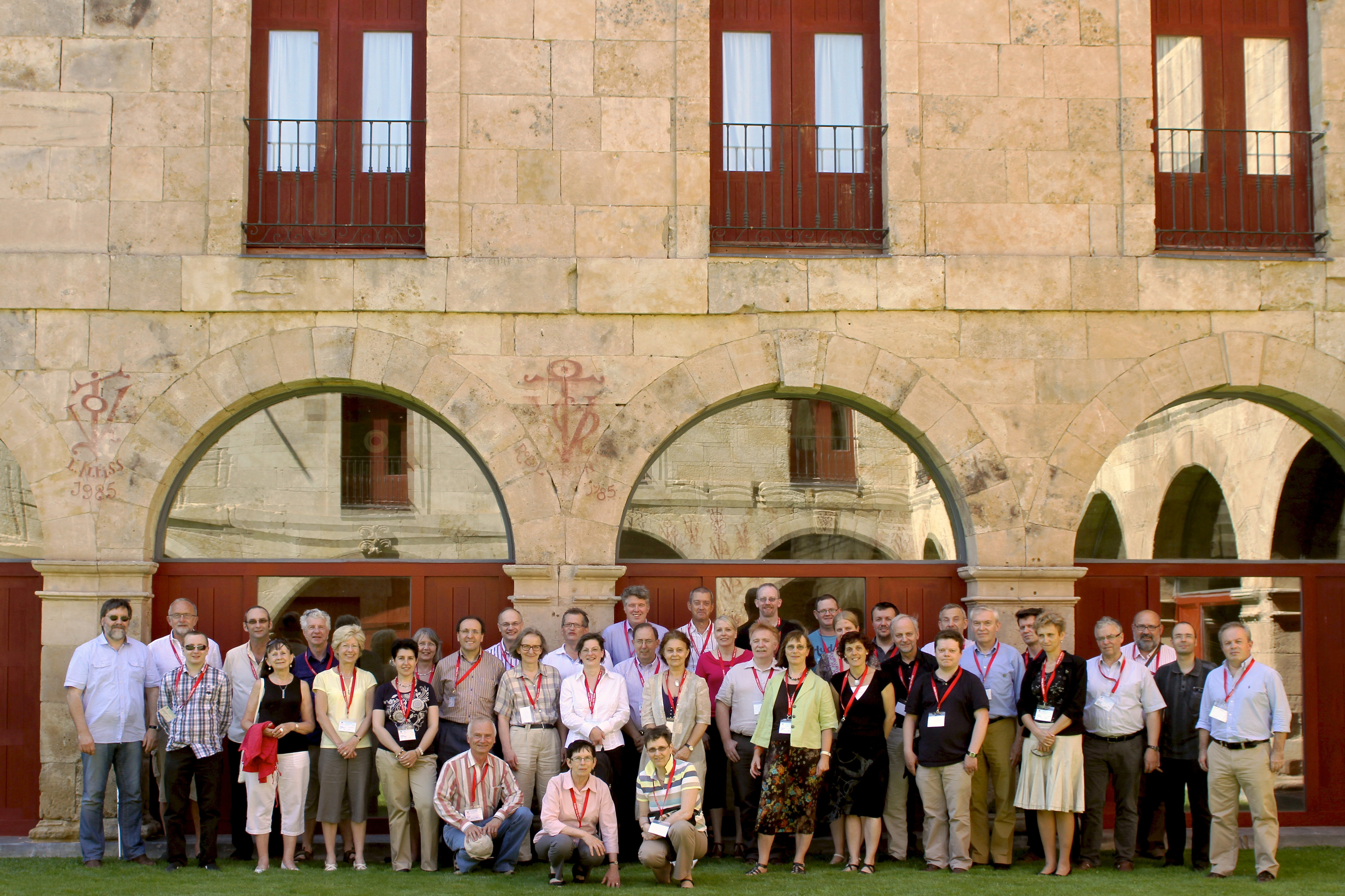
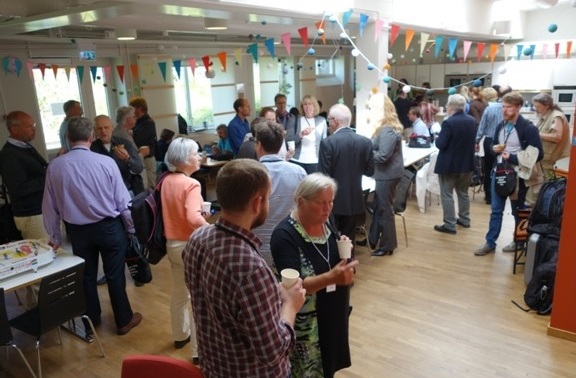
The Mathematics Special Interest Group (MSIG) was established in 1982 within the SEFI community.
Mathematics is at the heart of engineering, being both a language for the expression of ideas and the means of communicating results. An effective study programme in mathematics for all engineering students is a necessary requirement for the education of qualified engineering graduates capable both of innovation and of adaptation to changing technology. Uncertainty is an essential feature of the engineering environment and for this reason, the fields of probability and statistics are included in the Special Interest Group’s domain of interest.
Objectives
- to provide a forum for the exchange of views and ideas amongst those interested in engineering mathematics,
- to promote a full understanding of the role of mathematics in the engineering curriculum, and its relevance to industrial needs,
- to foster co-operation in the development of courses and support material, in collaboration with industry,
- to recognise and promote the role of mathematics in the Continuing Education of Engineers.
Topics of interest
- Activation of learners: How can we ensure that the students are more actively involved in the learning process than in the usual lecture?
- Use of technology: How can we use technology (CAS, pocket calculator, web, etc.) in the teaching and assessment process in a pedagogically sound manner?
- Modelling competences and their teaching: What are desirable modelling competences and who (mathematicians, engineers) teaches them how?
- Assessment: Which forms of assessment are used, what are their advantages and disadvantages, and which learning goals are induced by certain forms of assessment?
- Content and learning outcomes: What should be the contents and the learning outcomes of the mathematical education of engineers?
- Mathematics at the workplace: What kind of mathematical qualifications do engineers need in their professional life?
- Higher-level learning goals: What are higher-level learning goals (e.g. deeper understanding) and how can they be achieved?
- Mathematical needs in continuing engineering education: What kind of mathematical education do professional engineers need in addition to the one they obtained during their university studies?
- Integration of mathematics and engineering subject education: How can we integrate mathematics education and education in engineering subjects to avoid mathematics being seen as isolated and disconnected?
- Students’ attitudes towards mathematics: What are students’ attitudes to mathematics and how can we achieve a positive attitude where mathematics is seen as a valuable means to formulate and solve engineering problems?
- The transition from school to university: How can we alleviate the transition from school mathematics to university mathematics?
- Didactical principles: What valuable and proven didactical principles (from general mathematics education) can we use in the mathematical education of engineers?
- Mathematical education research: What are the main topics professional researchers in the mathematical education of engineers deal with and what are the main results relevant to the practitioner?
- It is the intention of the special interest group to provide and update a short overview for each topic and a small list of references for further reading.

SEFI MSIG steering committee annual meeting
During the first weekend of December, the steering committee of the Mathematics SIG had their meeting in Prague. It is always a fruitful time to share news about SEFI and our work as Mathematics Engineering teachers and discuss new and…
Mathematics Teaching in Engineering Education Seminar 2023
11-14 June 2023 – Tampere University of Applied Sciences (FI) About the seminar We would like to invite you to attend the MSIG2023, the 21st SEFI SIG in Mathematics seminar, to be held on 11-14 June 2023. The seminar is…
CALL FOR PAPERS: 20th MWG Seminar on Mathematics in Engineering Education
The 20th SEFI Mathematics Working Group Seminar on Mathematics in Engineering Education 15 – 17 June 2020 in Kristiansand, Norway event website The SEFI (European Society for Engineering Education) Mathematics Working Group (MWG) was established in 1982. The aims of…
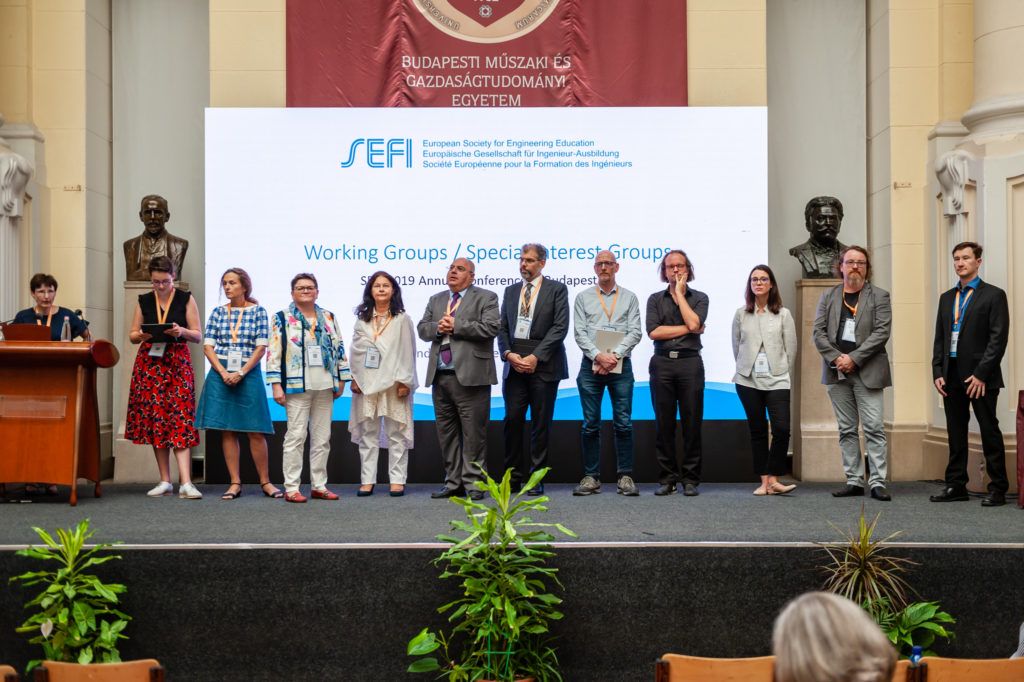
Follow your special interests with SEFI groups
Follow your special interests with SEFI groups SEFI offers an opportunity to delve into specific topics of engineering education with the Special Interest Groups. At the annual conference in Budapest, the groups organised multiple workshops and held well-attended meetings open…
Professors of Mathematics meet at SEFI seminar in Coimbra
Professors of Mathematics meet at SEFI seminar in Coimbra 26-29 June 2018 – ISEC – Institute of Engineering in Coimbra, Portugal. About 70 participants from 15 European countries participated at the bi-annual 19th SEFI-MWG European Seminar on Mathematics in Engineering…

Obituary: Dr Leslie Mustoe
Obituary: Dr Leslie Mustoe Leslie Mustoe attended The Boy’s Grammar School, Hitchin in the UK. He retained a lifelong attachment to the School and after retirement, taught there in a part-time voluntary capacity. He graduated from Birmingham University, progressing to…
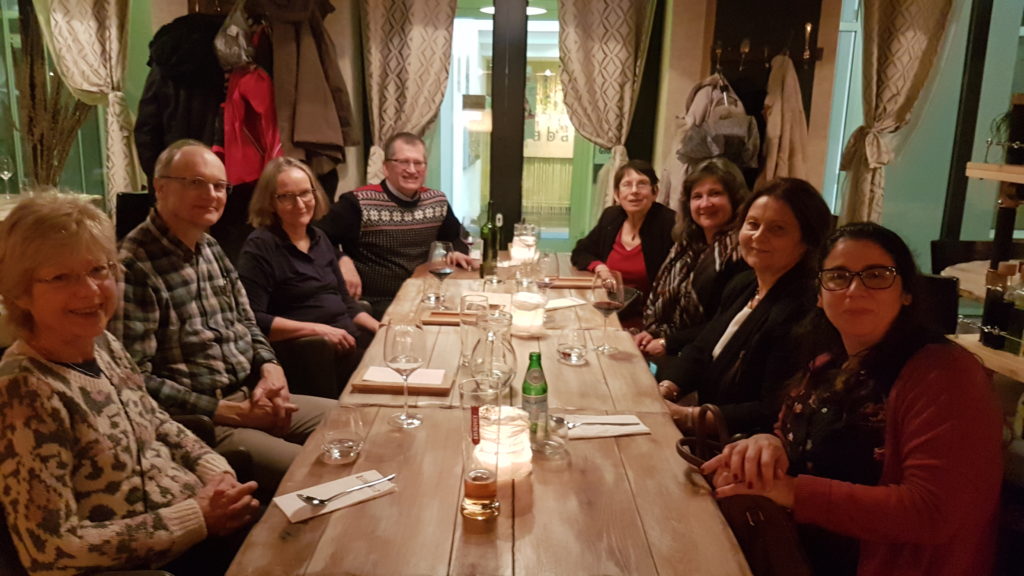
Working group on Mathematics – preparing for 2018
SEFI Mathematics Working Group’s Steering Committee met at the annual coordination meeting on December 8-9, 2017, at the Faculty of Mechanical Engineering, Slovak University of Technology in Bratislava, Slovakia. chair: Daniela Velichová, STU in Bratislava, Slovakia members: Burhkard Alpers, Univerity…
19th SEFI-MWG European Seminar on Mathematics in Engineering Education
26-29 June 2018 – Coimbra Institute of Engineering, Coimbra, Portugal.
Abstracts of presentations, posters or software demonstrations (maximum 1 page) should be uploaded by January 15, 2018.
18th WG on Mathematics seminar
Chalmers University of Technology in Gothenburg, Sweden, hosted the 18th SEFI Mathematics Working Group Seminar in June 27-29, 2016. More than 60 participants from 15 European countries gathered for three days to discuss important issues related to the mathematical education…
SEFI Mathematics Working Group Seminar
The 17th SEFI Mathematics Working Group Seminar took place in Dublin, Ireland, on June 23 – 25. About 70 participants from 12 European countries came together for three days to discuss important issues related to the mathematical education of engineers.…